
Shoulder/Elbow Brace for Dogs and Cats
When to Use the Shoulder/Elbow Brace for Dogs or Cats
A shoulder brace (orthosis, support, or stabilizer) is a specialized device designed to support, stabilize, and protect the shoulder joint in dogs. It is used in cases where the joint requires reduced load, limited mobility, or assistance during recovery.
Indications for use:
- Muscle and ligament strains of the shoulder – helps reduce pain and provides joint rest.
- Shoulder dislocation or subluxation – stabilization supports recovery of the correct anatomical position.
- Shoulder bone injuries – during postoperative recovery or conservative treatment.
- Swelling, inflammation, arthritis – relieves excess stress on the joint and helps reduce inflammation.
- Joint instability caused by dysplasia or degenerative conditions – improves comfort and stability during movement.
- Increased shoulder abduction angle (excessive mobility) – limits abnormal range of motion and prevents tissue damage.
- Postoperative rehabilitation – protects and supports the joint during recovery.
- Prevention of recurrent injuries – especially important for active, working, or sporting dogs.
Shoulder supports may also be recommended for puppies with underdeveloped ligament and joint structures and for senior pets, improving mobility and providing extra protection from injury.
Design of the Shoulder Brace
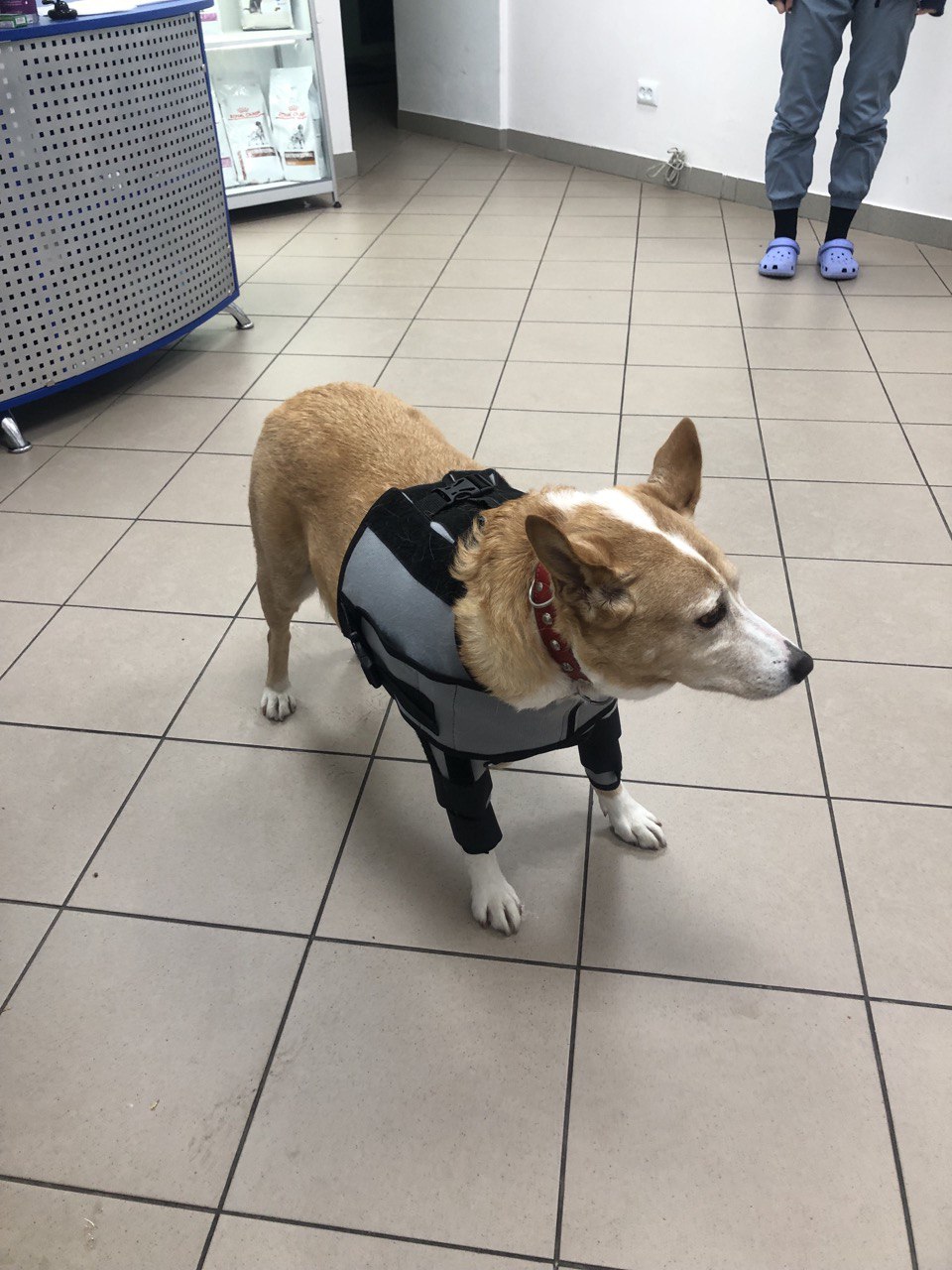
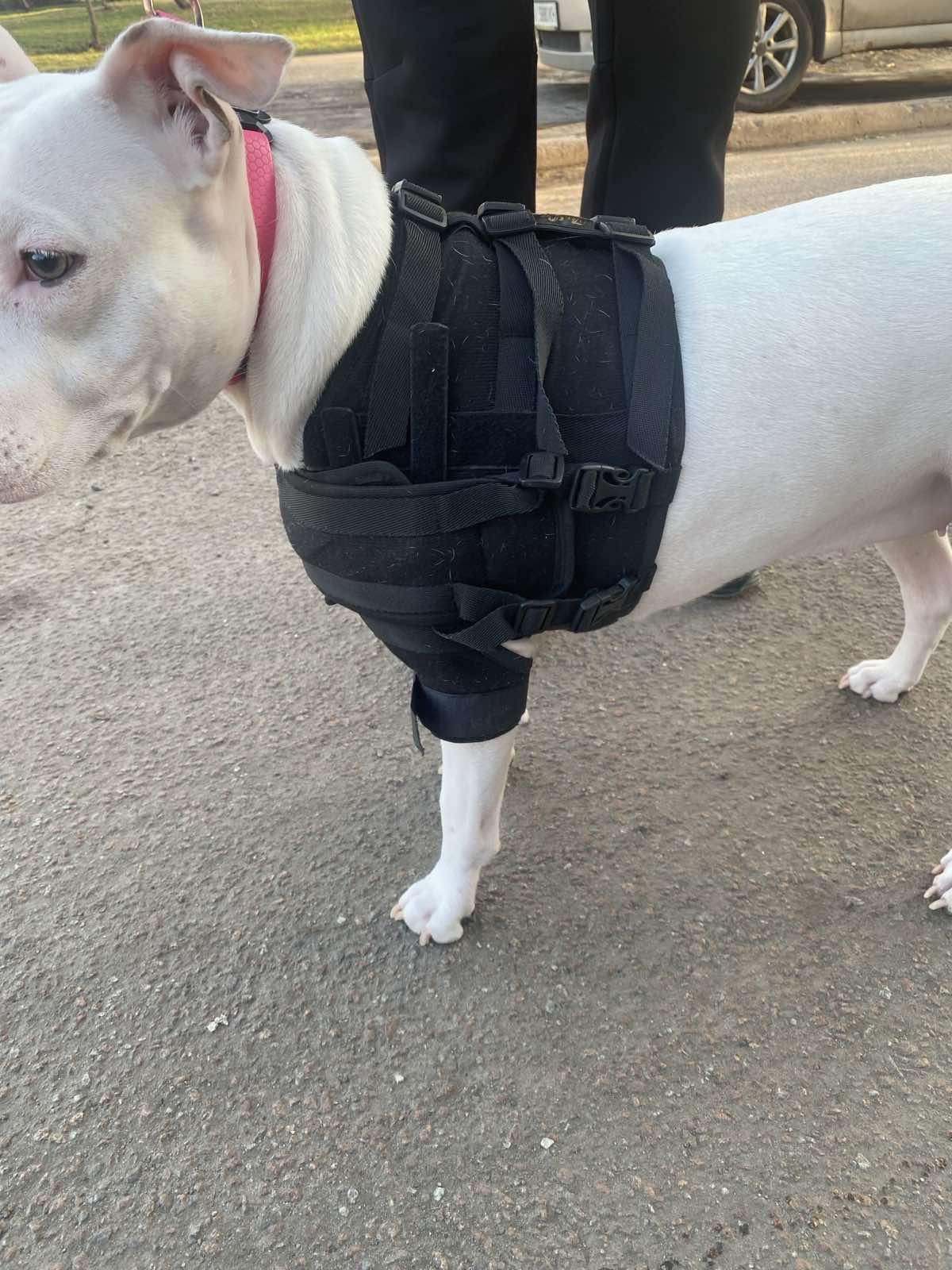
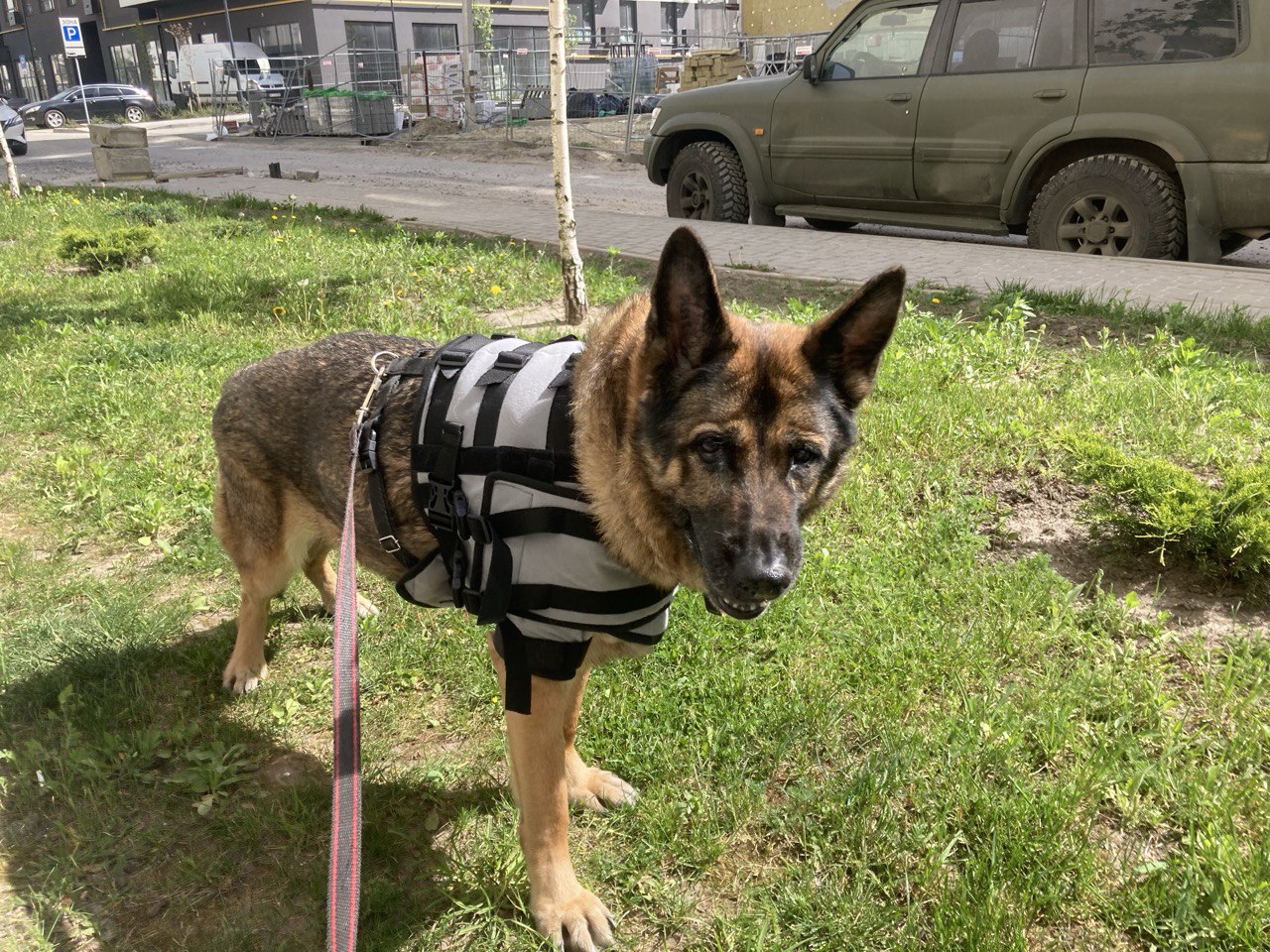
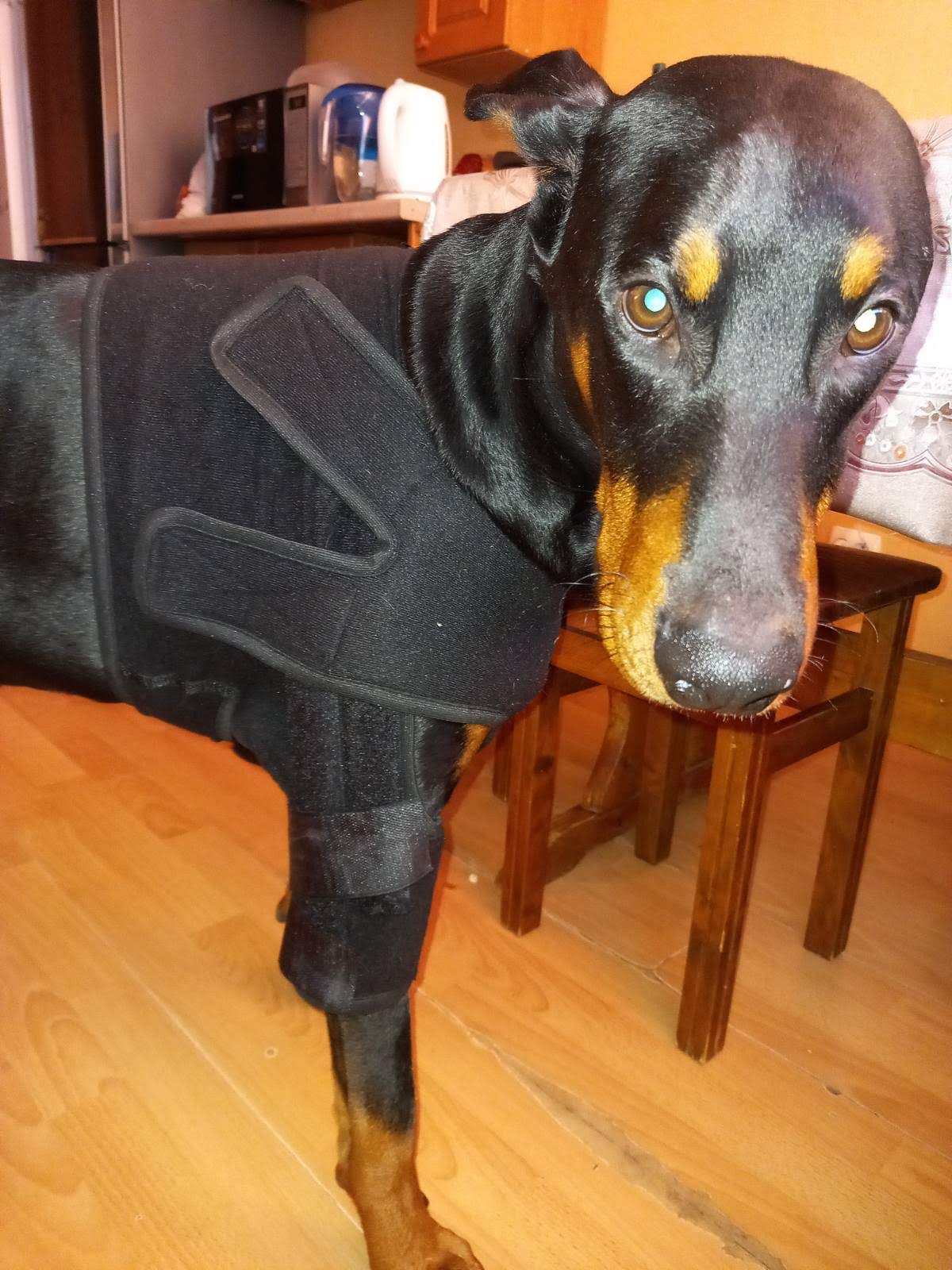
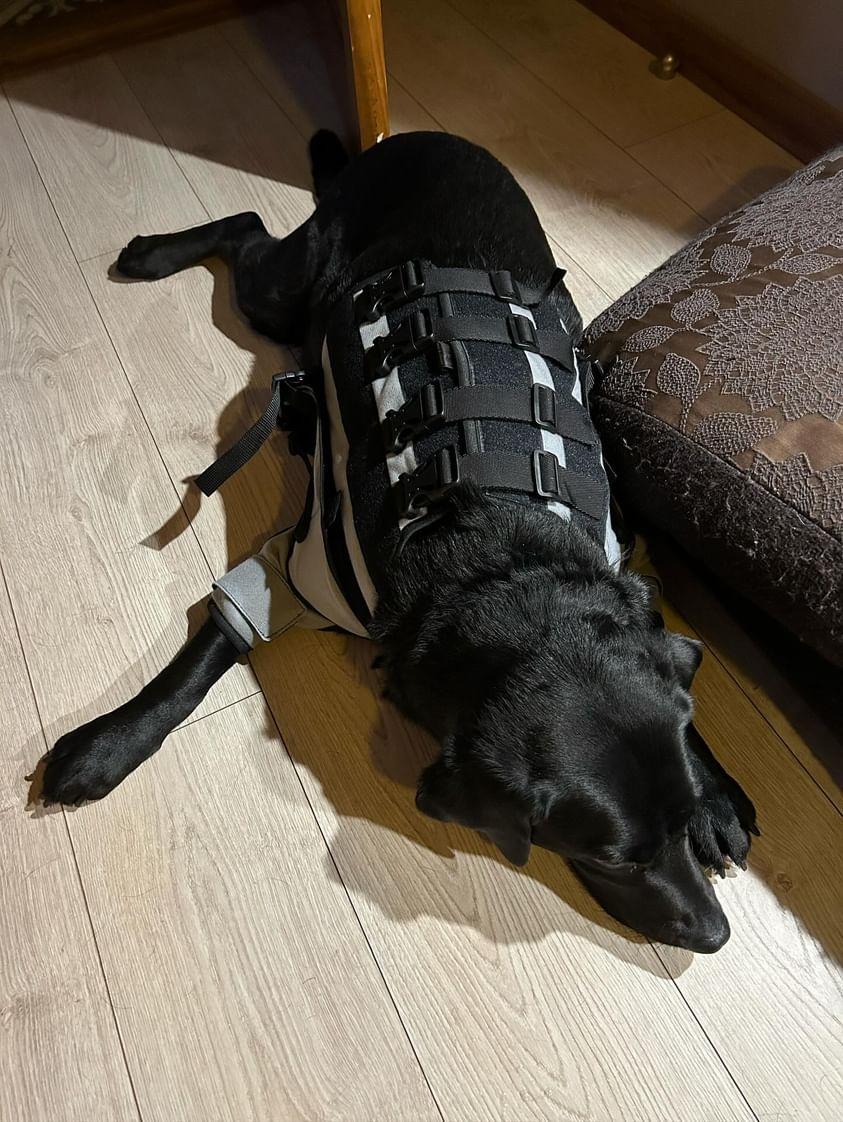
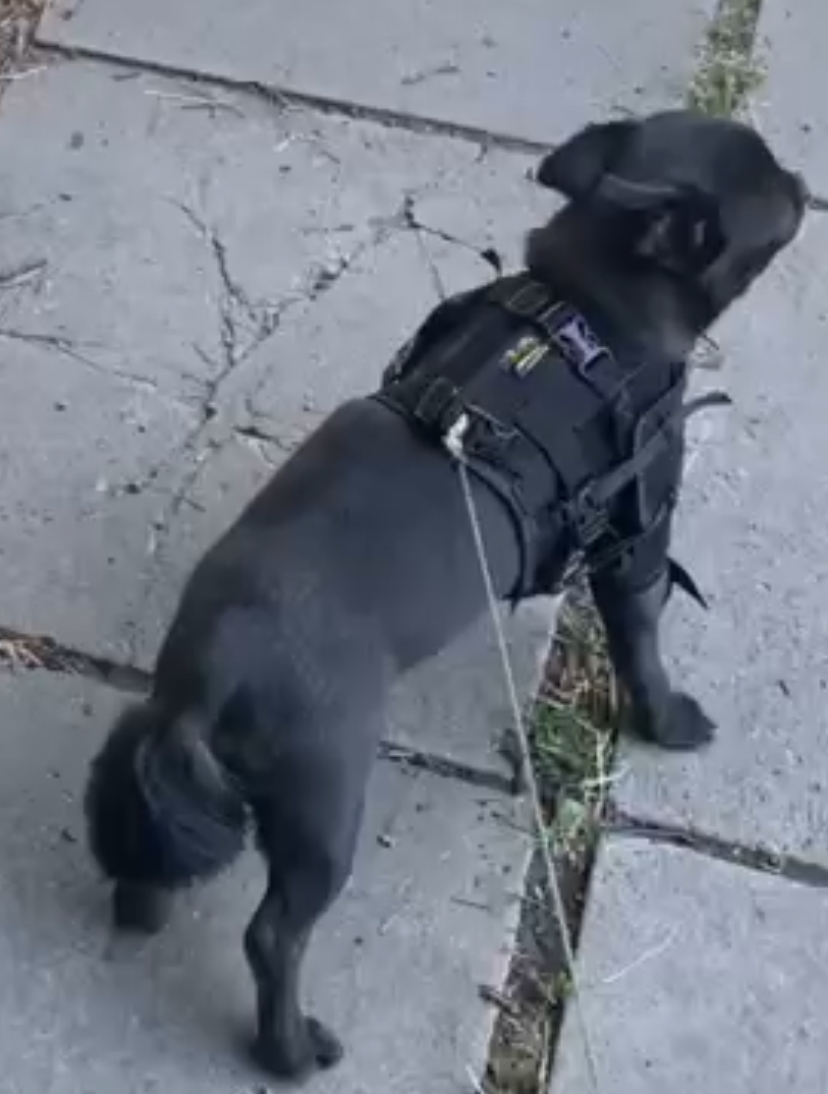
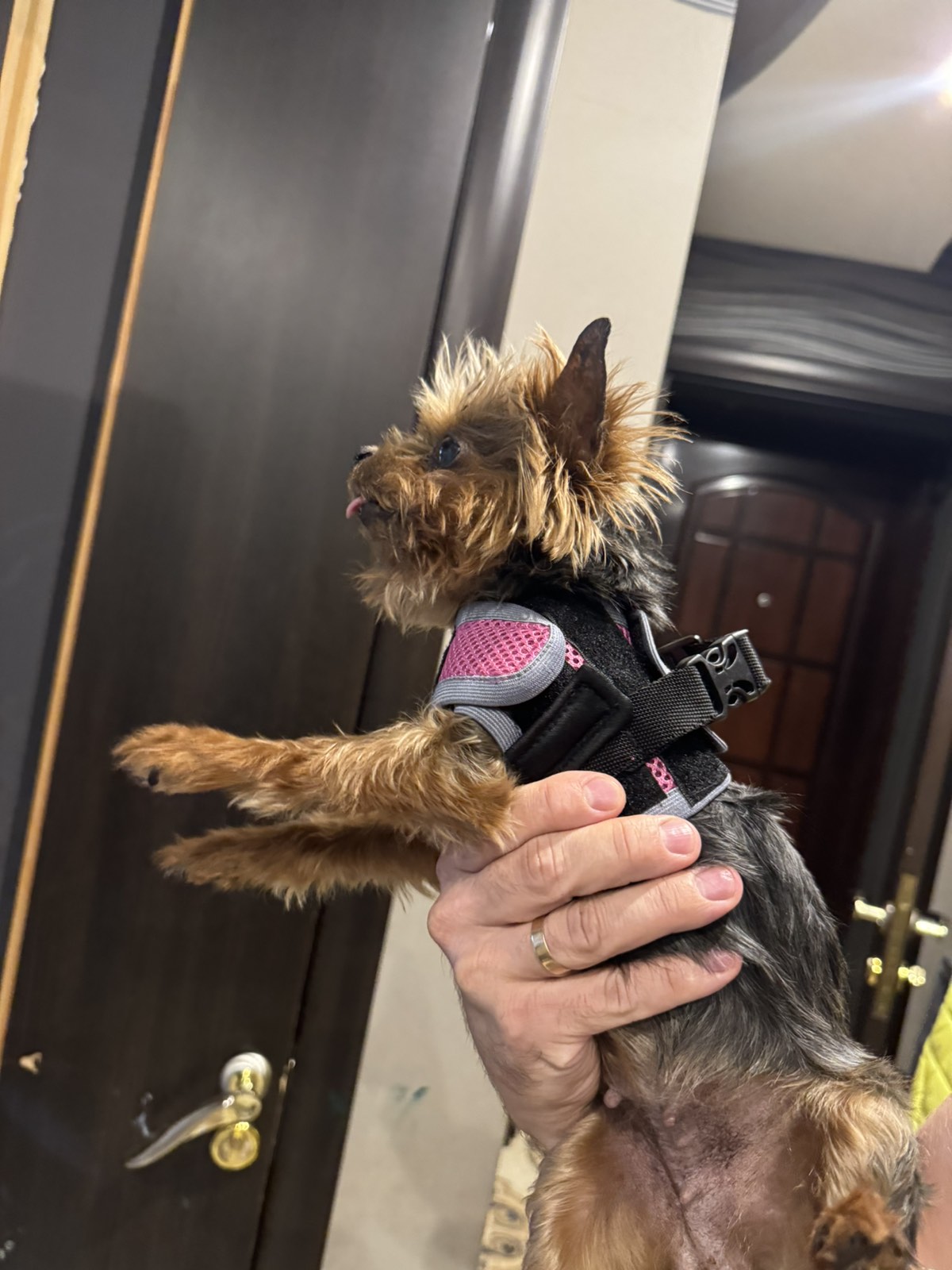
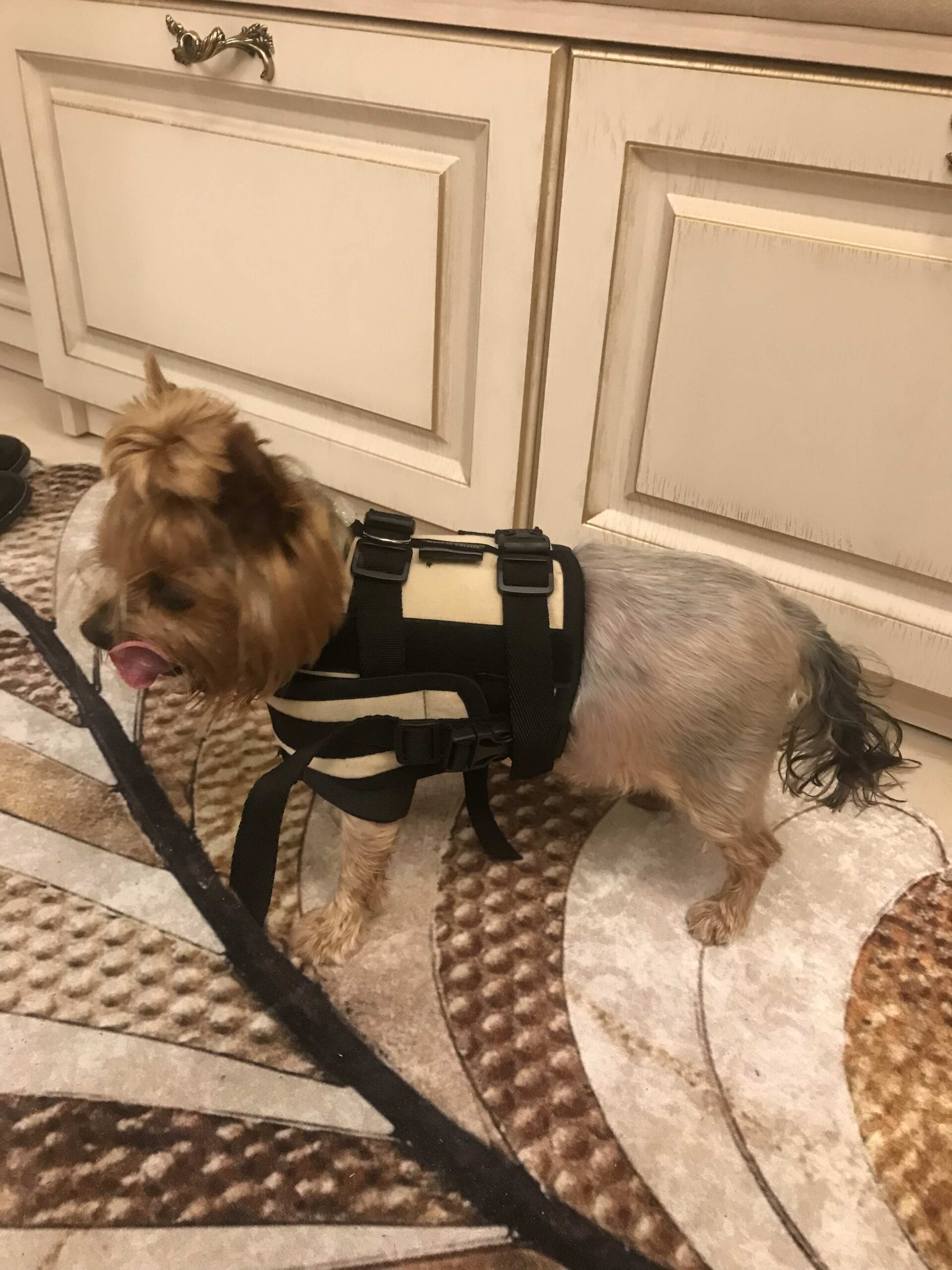
The shoulder brace is made of lightweight, breathable, elastic neoprene that does not trap moisture and ensures comfort even during prolonged wear. Its design resembles a vest with a half-belt under the neck and a convenient fastening system on the sides.
For reliable stabilization and restriction of shoulder movement, the brace includes:
- Primary reinforcements along the spine – made of metal or durable plastic (depending on the dog’s size).
- Additional removable stays, typically positioned on the sides at shoulder level.
This construction provides optimal stabilization, allows adjustment of the support level, and reduces strain on the injured joint, while still preserving safe mobility as recommended by the veterinarian.
How to Take Measurements for a Shoulder/Elbow Brace for Dogs and Cats
To measure your pet, you will need a soft measuring tape.
Your dog can stand on all four legs for accuracy, but for this type of brace it is not critical.
⚠️ Important: the measuring tape should fit snugly to the dog’s body without pressing too tightly, so that the measurements are accurate but comfortable for the animal.
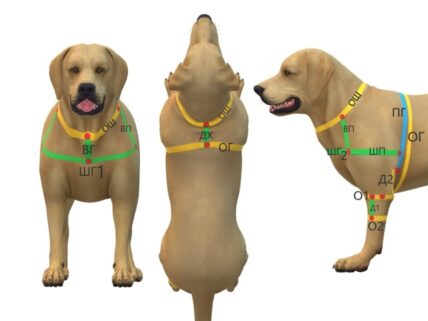
- ОШ – Neck Circumference - Measure the circumference of the neck at its base, closer to the shoulders.
- ВП – Shoulder Height - From the base of the neck to the highest point of the shoulder blade (above the front leg).
- ВГ – Chest Height - From the base of the neck (front, at the jugular notch) down to the lowest point of the chest.
- ШГ1 – Chest Width 1 - Horizontal distance between the front legs at the upper part of the chest.
- ДХ – Withers Length - From the base of the neck (at the shoulder blades) to the chest circumference line.
- ОГ – Chest Circumference - Measure around the widest part of the ribcage, just behind the front legs.
- ШГ2 – Chest Width 2 - Horizontal distance between the front legs across the chest along the line of ШГ1, including the shoulder width line (from armpit to armpit).
- ШП – Shoulder Width - Distance between the armpit and the shoulder joint on the side.
- ПГ – Half Chest Circumference - Measured across the back from armpit to armpit.
- О1 – Upper Forearm Circumference - Measure around the limb at the elbow joint line.
- Д2 – Armpit Length (or Armpit Depth) - Distance from the armpit along the front leg.
Sometimes an additional sleeve is required for extra support of the elbow joint, and even the carpal (wrist) joint — consult your veterinarian. In that case, these additional measurements are needed:
- Д1 – Length to the Wrist - From the О1 line down to the wrist crease.
- О2 – Lower Wrist Circumference - Circumference of the limb at the bottom of the sleeve.
A small margin of error (1–2 cm) in circumference is acceptable. You may also send us photos of your pet with the tape in place, as shown below. This helps us create the most accurate custom brace, taking into account individual nuances.
Examples of Taking Measurements
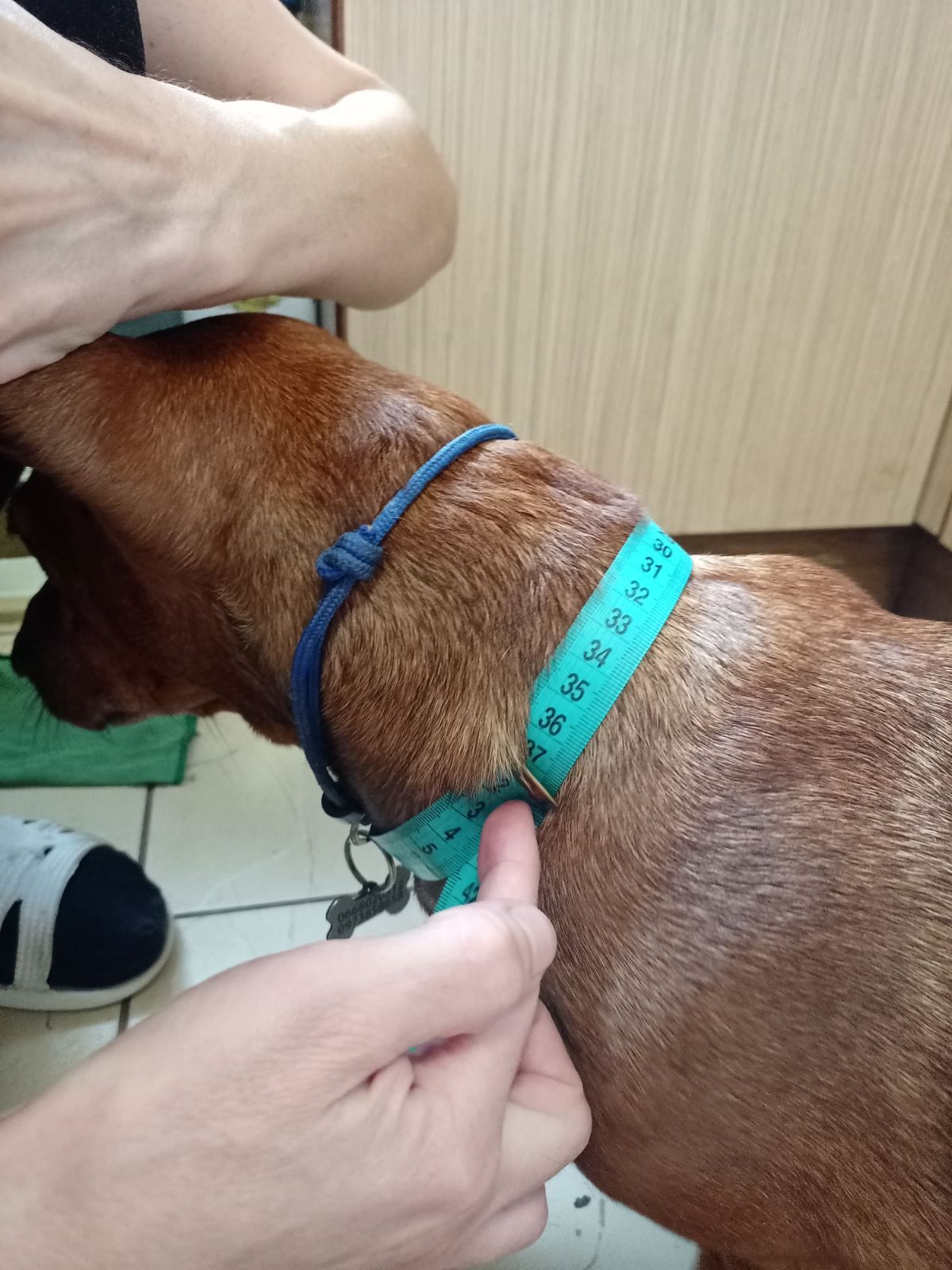
ОШ – Neck Circumference
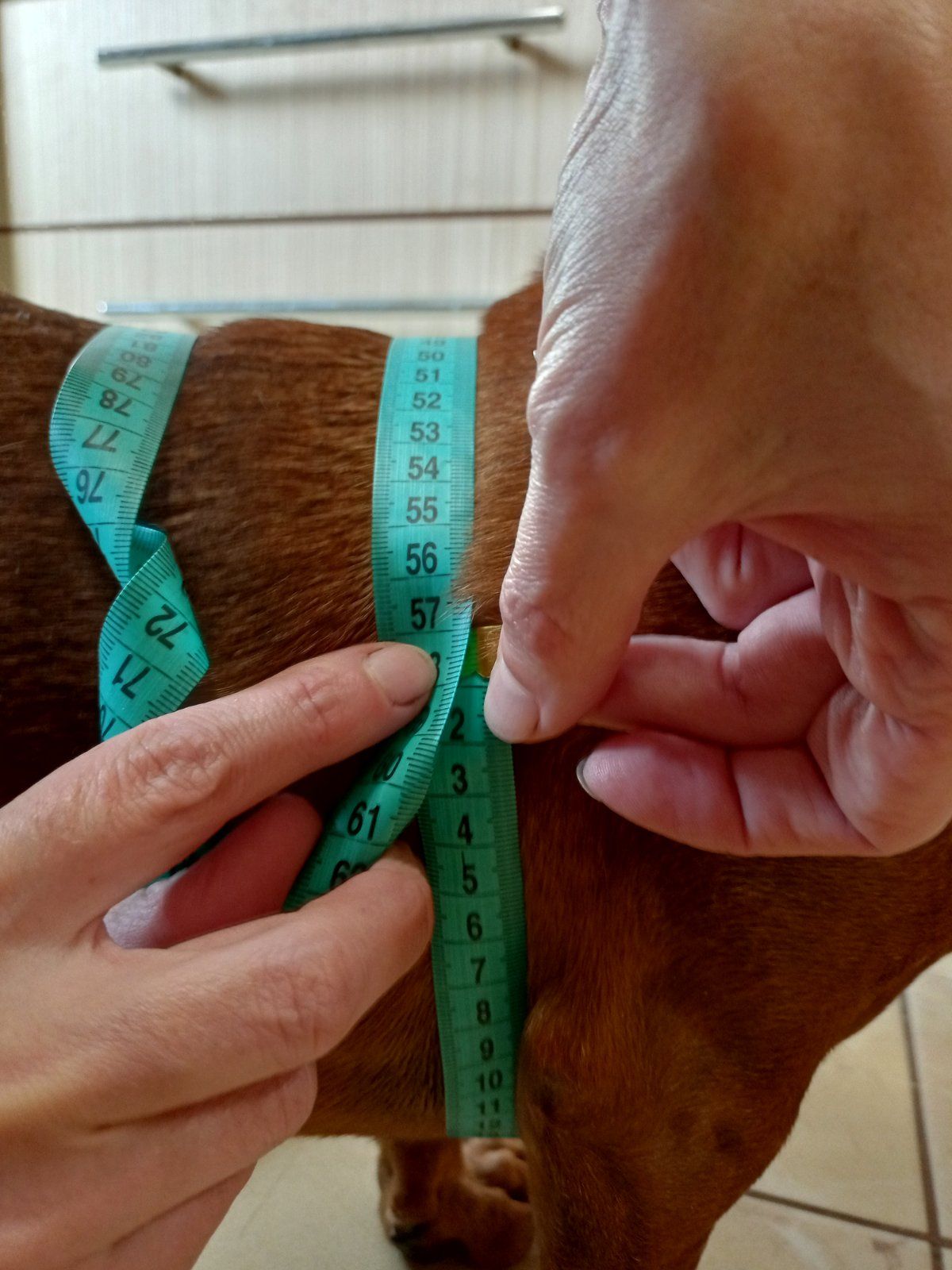
ОГ – Chest Circumference
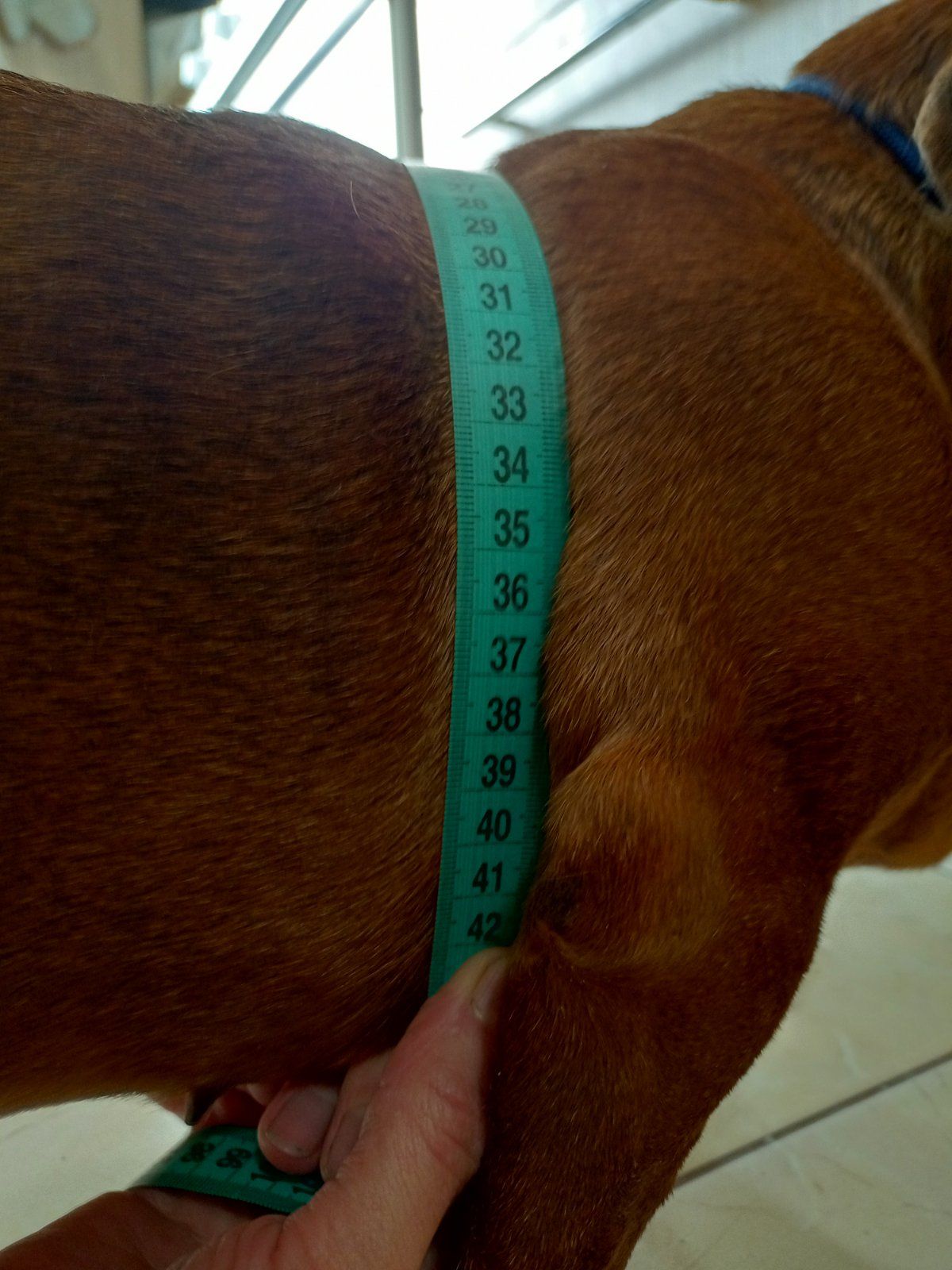
ПГ – Half Chest Circumference
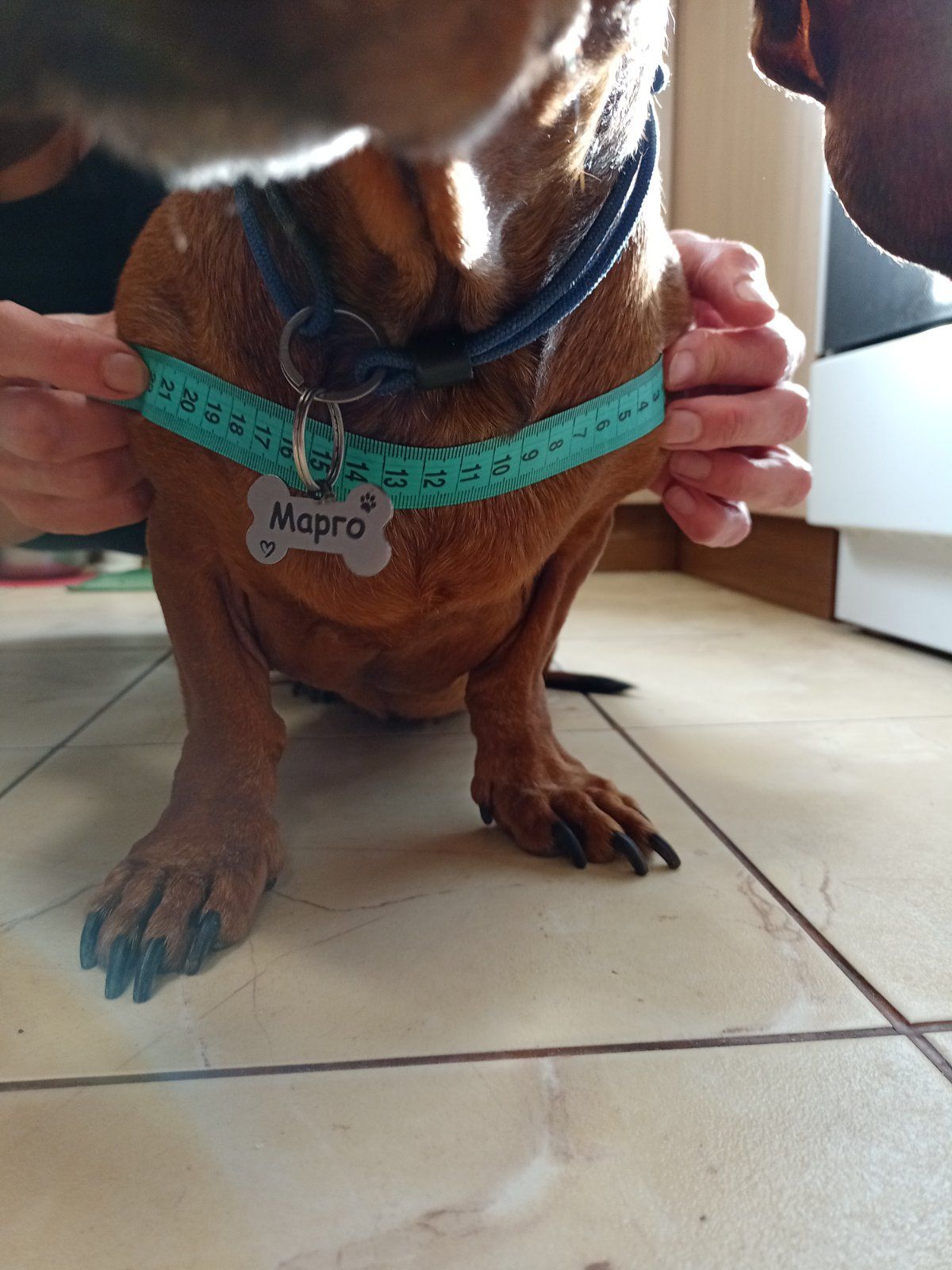
ШГ1 – Chest Width 1
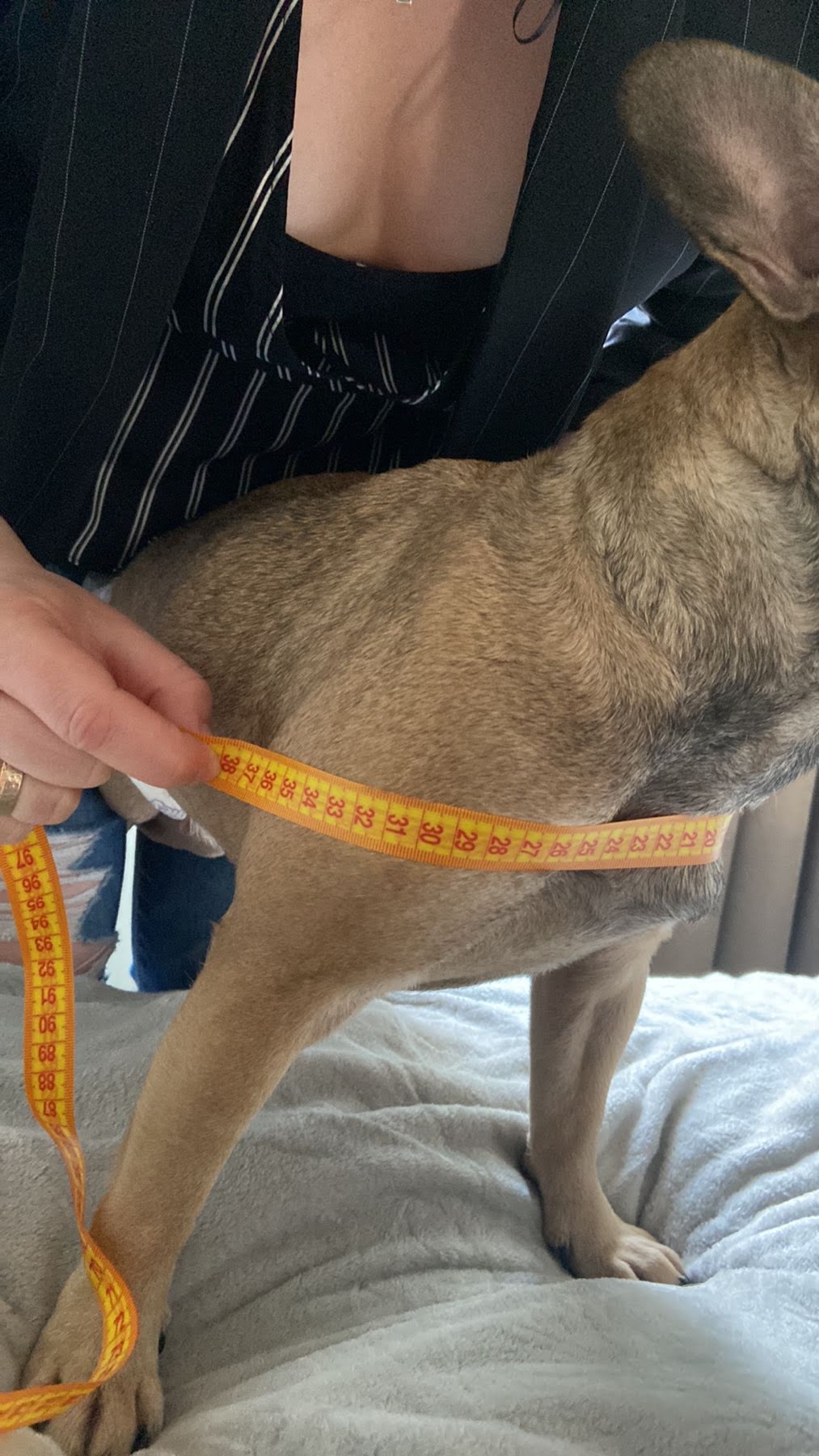
ШГ2 – Chest Width 2
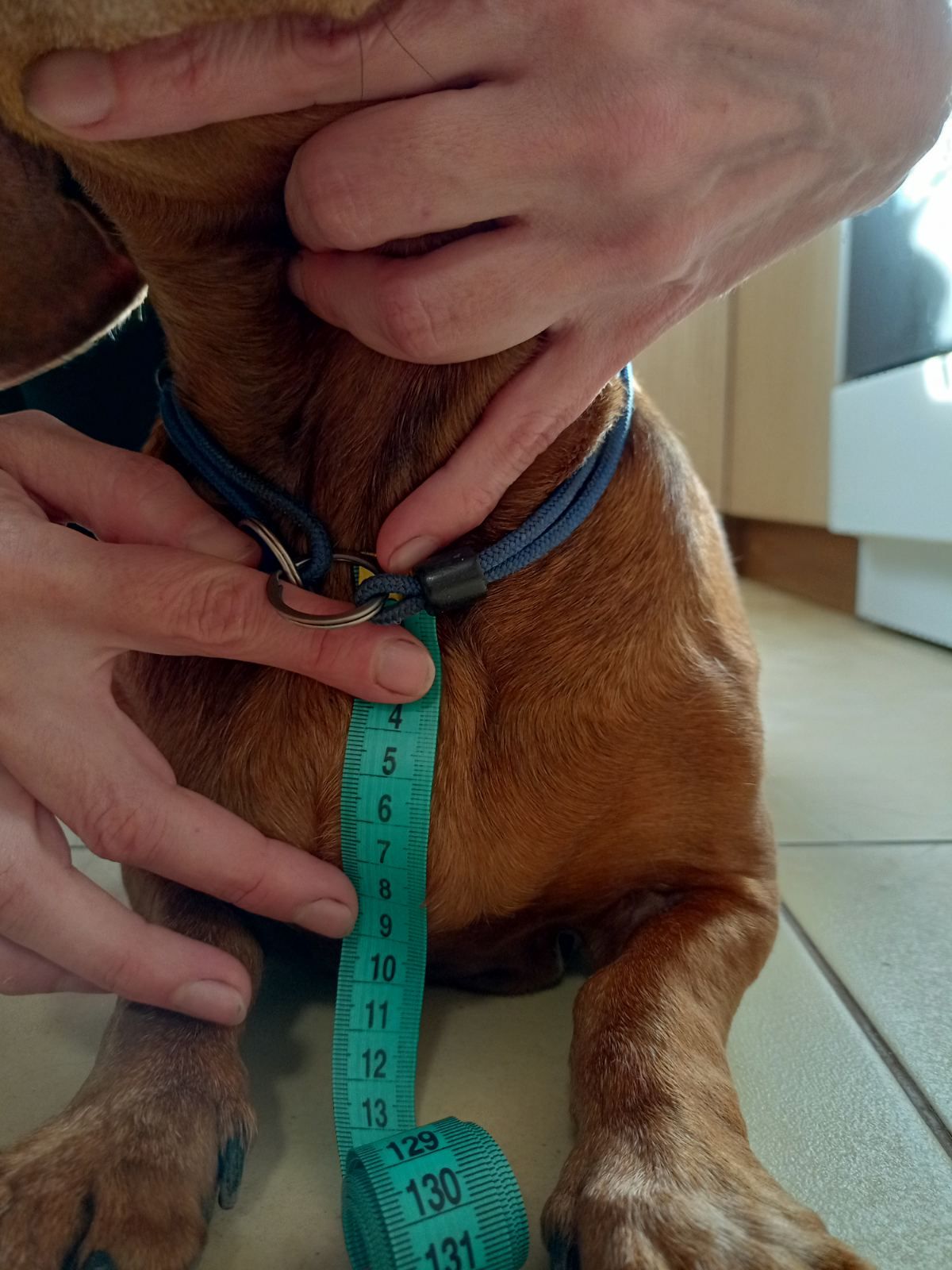
ВГ – Chest Height
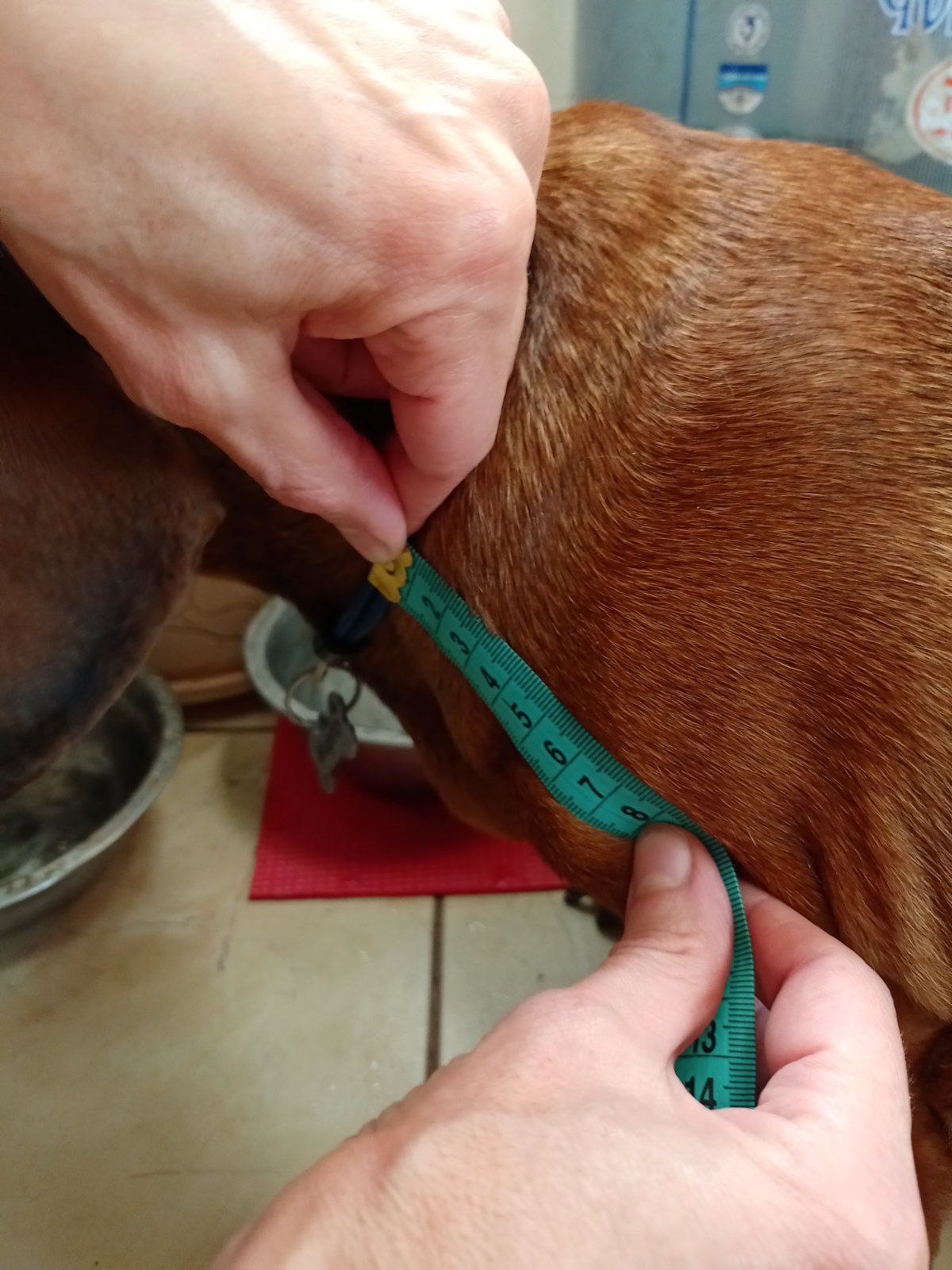
ВП – Shoulder Height
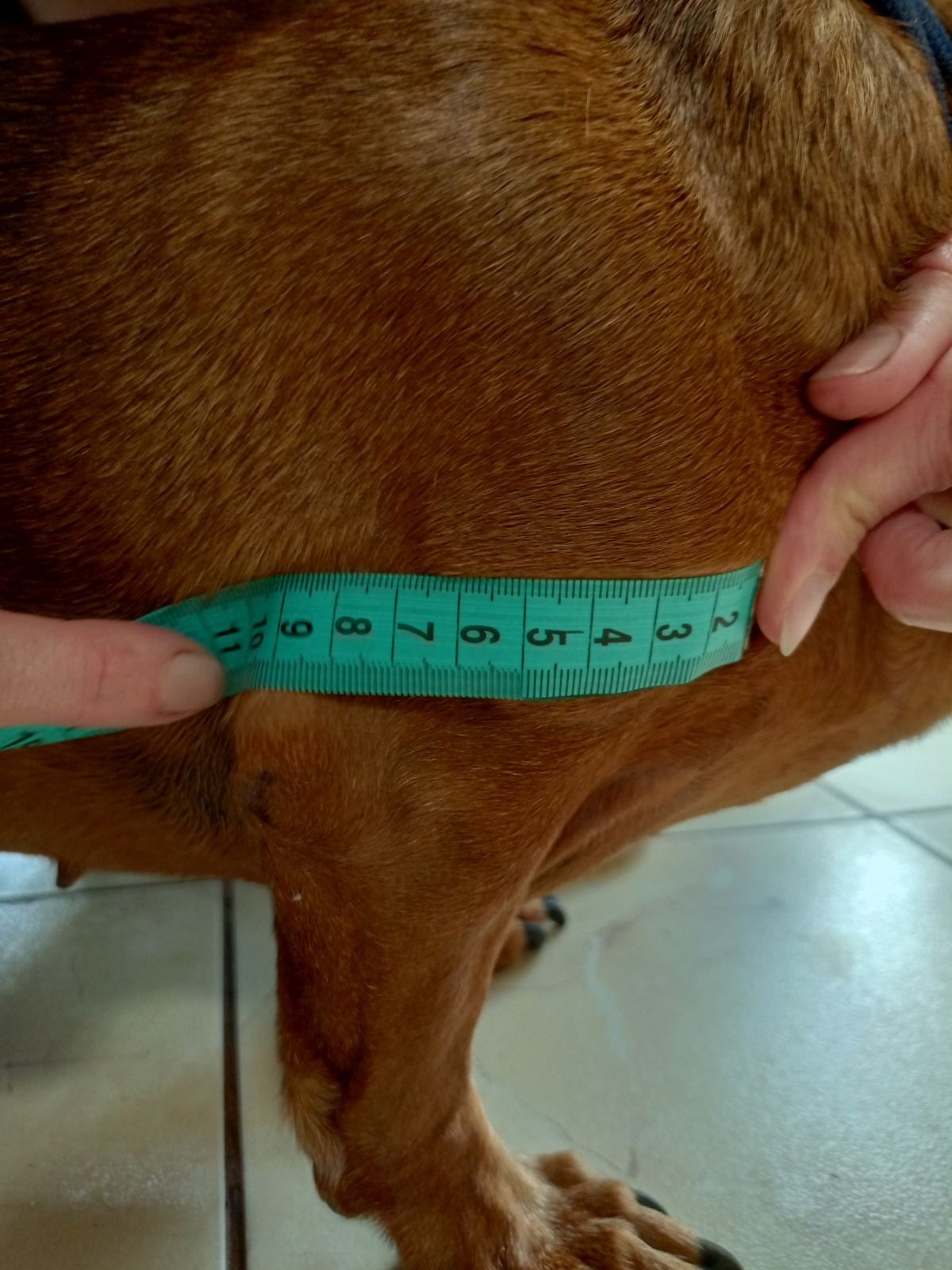
ШП – Shoulder Width
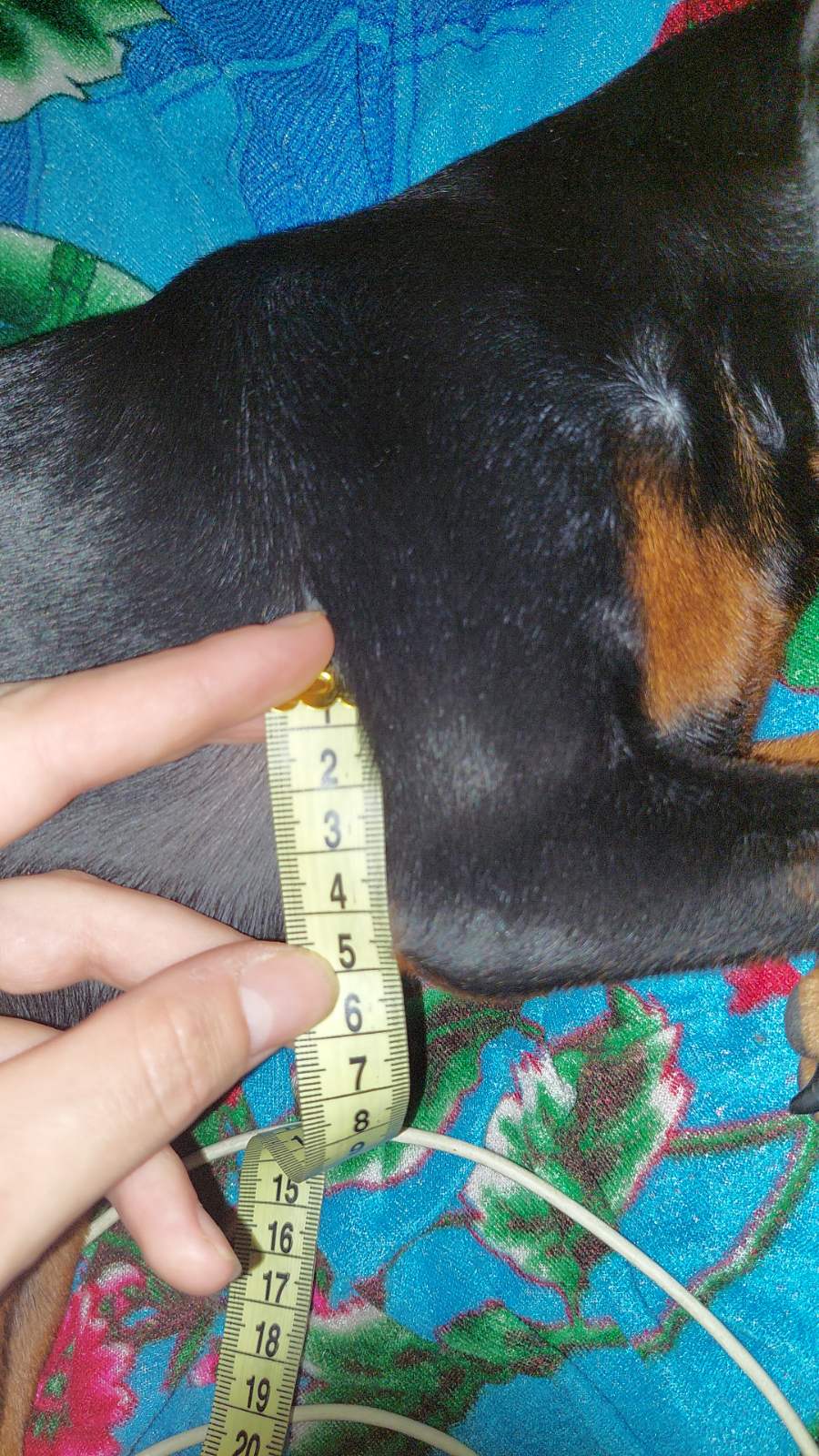
Д2 – Armpit Length (or Armpit Depth)
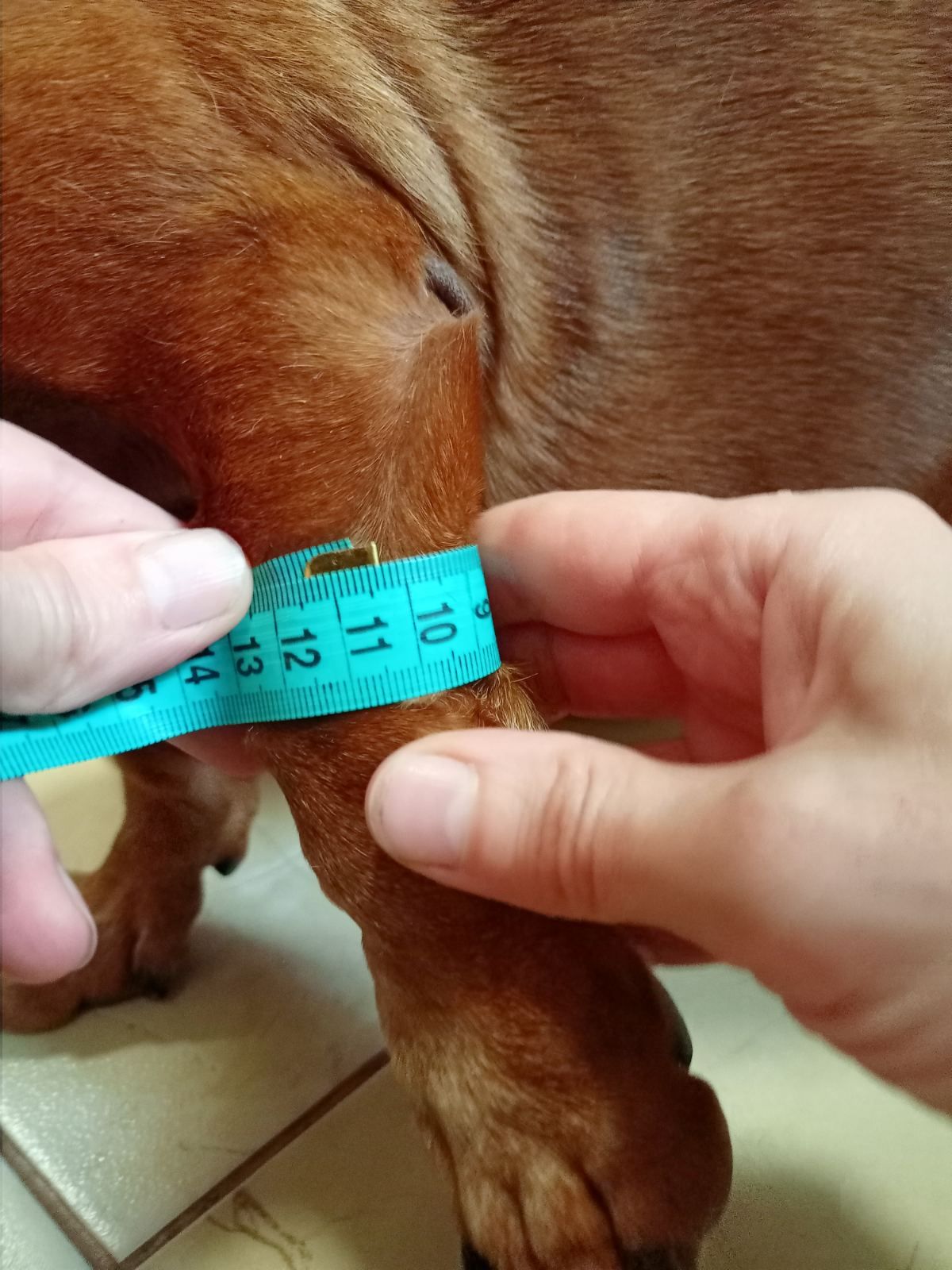
О1 – Upper Forearm Circumference
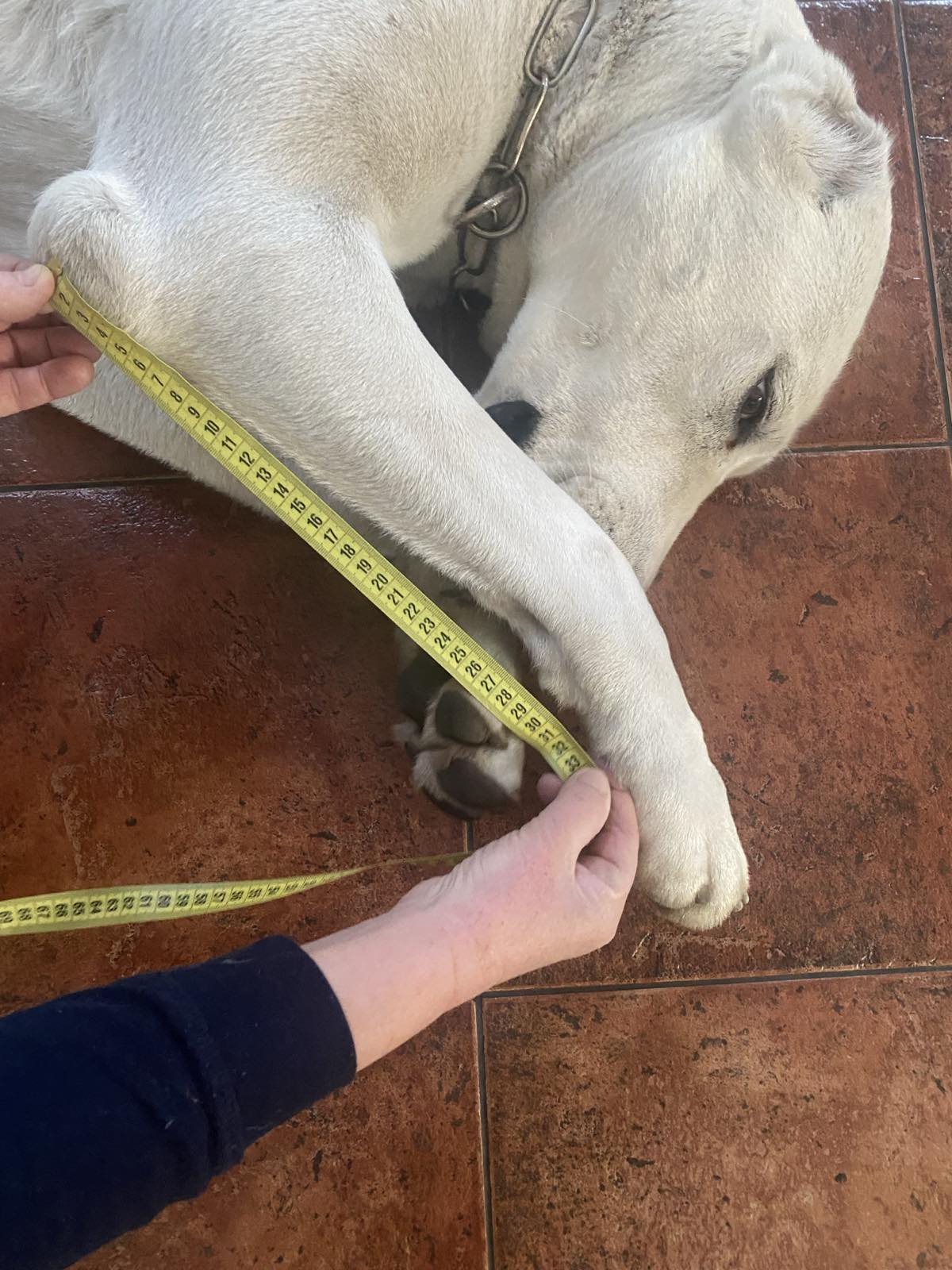
Д1 – Length to the Wrist
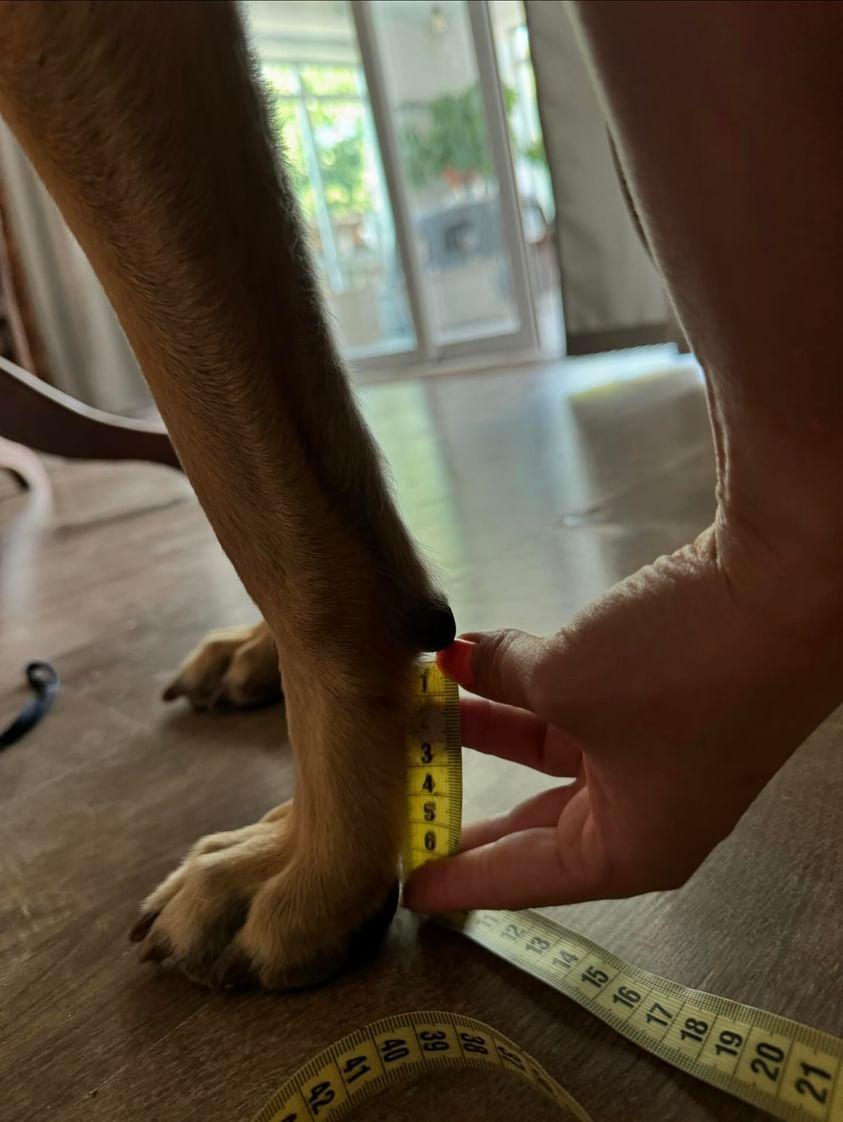
Distance from the toes to the wrist bone, if wrist support is required
Important Recommendations for Taking Measurements
Consider Deformations
If your pet has any deformations, such as a large swelling from elbow bursitis, be sure to mention them when placing your order. Take a photo and, if necessary, measure the affected area separately. This helps us create an orthosis that fits your pet perfectly.
Combining with Paw Support
In some cases, a shoulder or elbow orthosis may need to be used together with support for the toes or front paw, for example in cases of:
- Numbness in the toes or paw
- Ligament tears
- Refusal to put weight on the paw
- Wear on the top of the paw
Such a model may include an adjustable elastic strap, which can be tightened and secured by yourself or with the help of a veterinarian.
Reinforcements (Stays)
By default, the shoulder/elbow brace includes a pair of rigid stays along the spine, as well as two removable stays on each side.
The presence of additional or alternative stays depends on the situation — for example, fractures, cracks, or joint instability. Most often, the stays are fixed and straight, but boomerang-shaped stays with a 140° angle can also be used.
Flexible stays that allow elbow movement are also available.
The type and use of stays should always be discussed and approved by your veterinarian.
Protection Against
Chewing If your dog lives outdoors, in a kennel, or tends to chew the brace, we recommend using a veterinary collar to protect the device.
How to Put on a Shoulder/Elbow Brace (Orthosis, Support, or Splint) for Dogs and Cats
1. Prepare the brace
Separate the vest into three parts: the half-belt and the two side panels.
Make sure all Velcro straps and fasteners are unfastened and that the reinforcements (stays) are in the correct position.
2. Connect the side panels on the back
Place the side panels along your dog’s sides so that the back reinforcements run along the spine.
Join the two panels together on the back.
3. Secure under the belly
Bring the side panels together under the belly, adjusting the fit snugly around the chest.
Ensure your dog can breathe freely, and that the brace does not shift.
4. Fasten under the neck
Tightly, but without excessive pressure, fasten the Velcro under the neck.
The reinforcements should be positioned vertically along the shoulders.
5. Put on the half-belt
Place the half-belt over the chest, under the neck, and over the reinforcements.
Connect it to the fasteners on the vest at chest level, ensuring a snug but comfortable fit.
6. Check the fit
The brace should hold securely without twisting or rubbing the skin.
Ensure the reinforcements are in the correct position, and that your dog’s movement is only limited as necessary.
7. Secure the sleeves
Fasten the sleeves snugly around the elbow and wrist with Velcro straps.
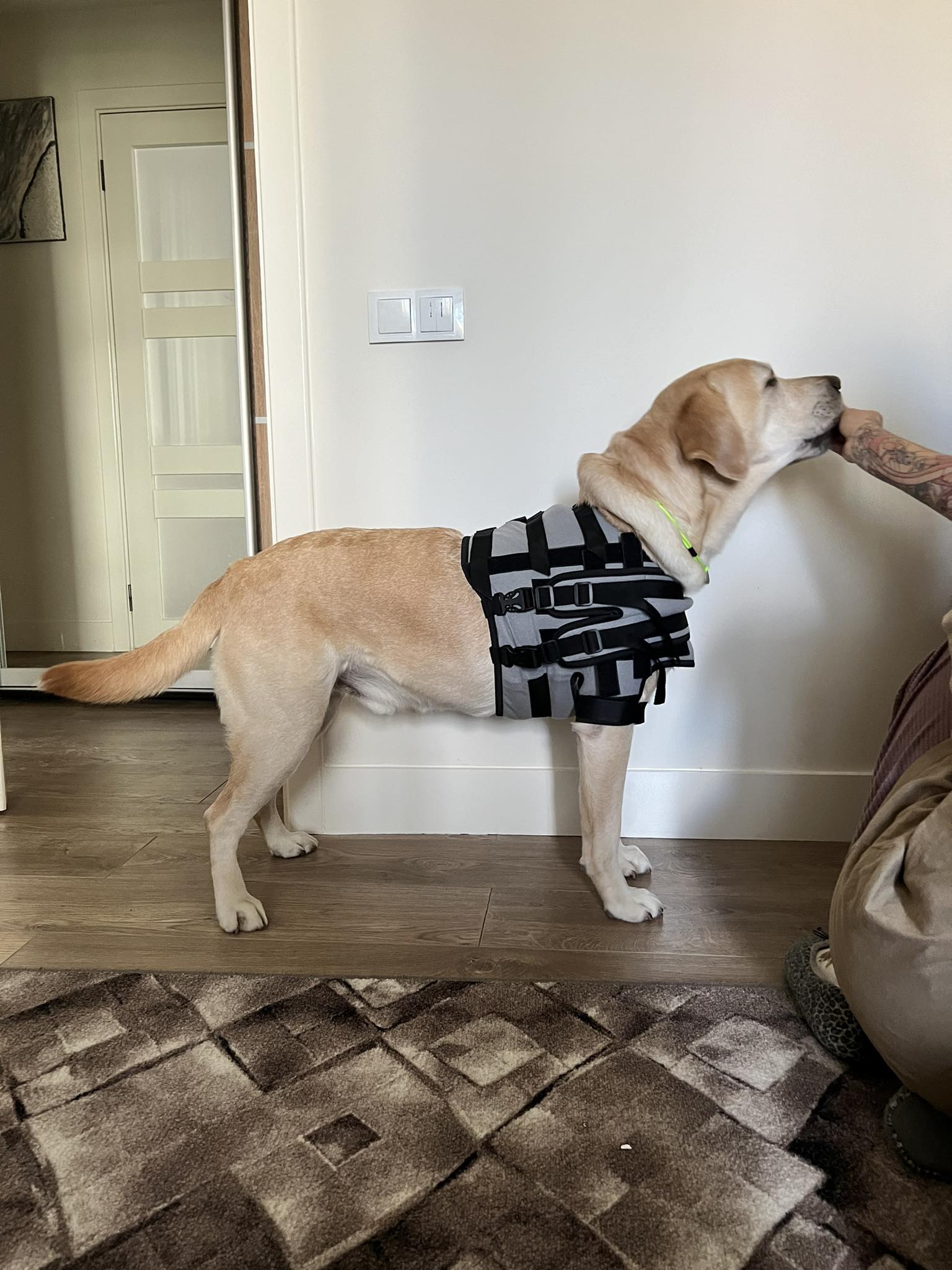
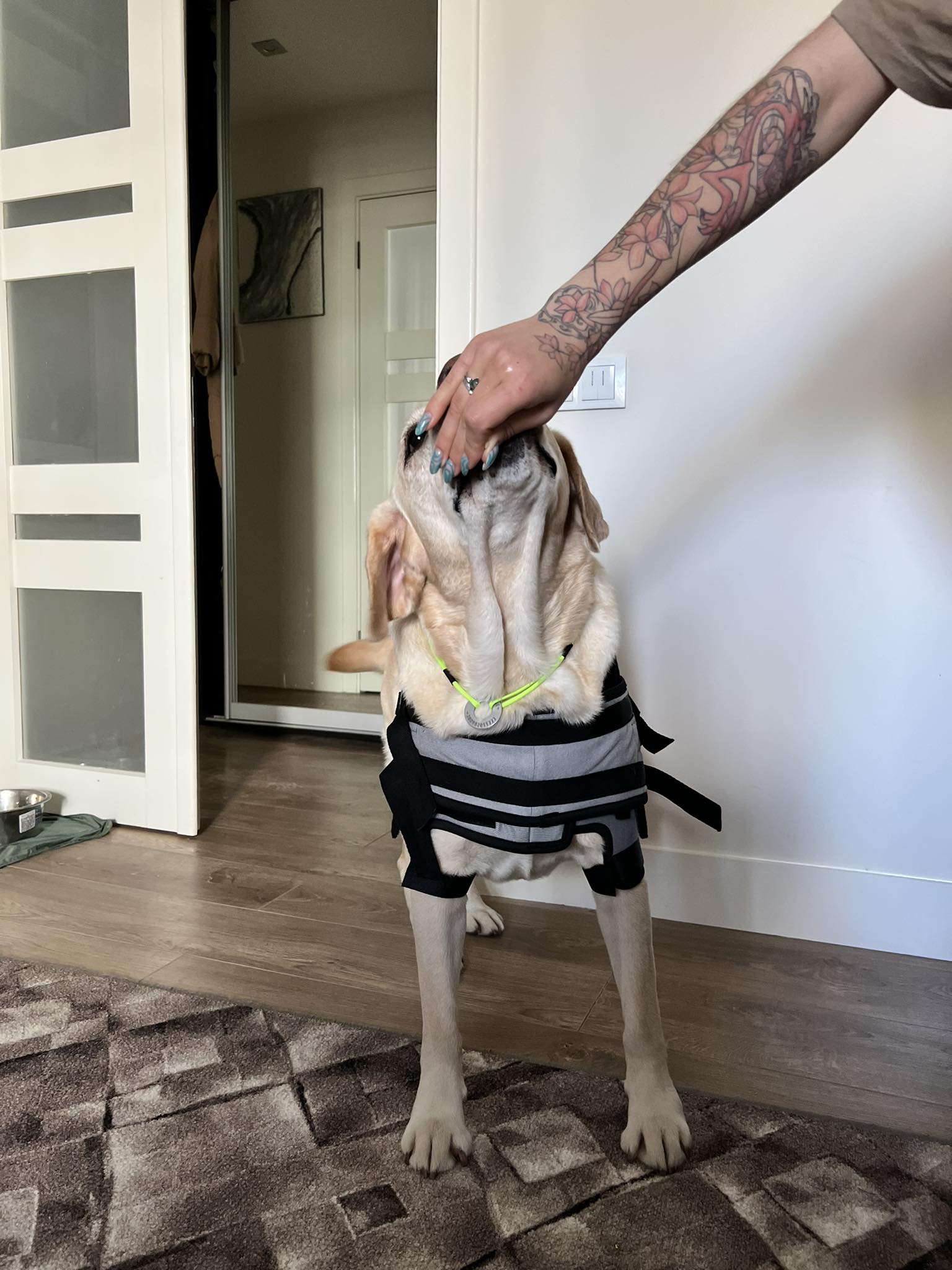
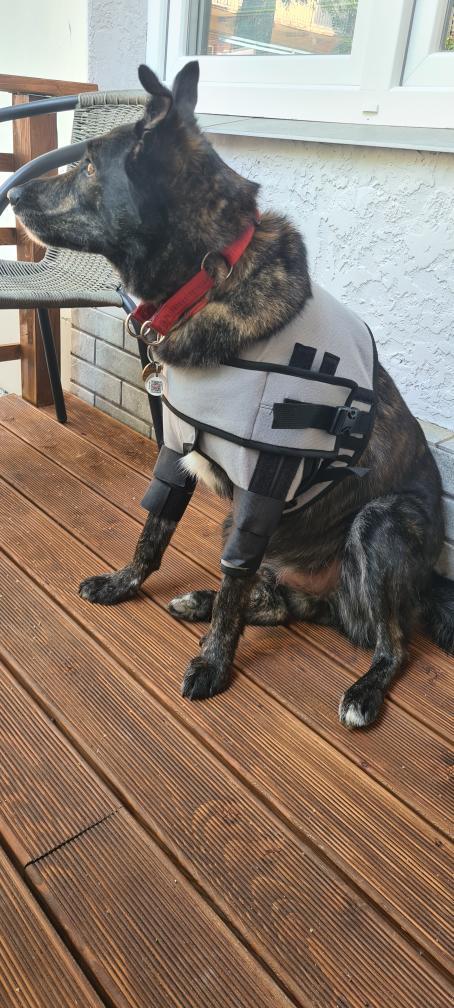
With accurate measurements, we can easily make the right product for your pet.
If you have any doubts about the measurements you took, we can guide you to take them online via Viber, Telegram, WhatsApp, or Messenger.
Measurements can also be taken at most veterinary clinics in your country by prior appointment.
If the measurements turn out to be incorrect and the product needs adjustments, we are always happy to help. You won’t pay anything extra for the adjustment — only for shipping the product both ways.
We also truly appreciate video and photo feedback 🙂
Wishing good health to you and your pets!
Contact ZooLila
+380 93 512 75 74
infozoolila@gmail.com
Monday - Friday: 10AM to 7PM
Saturday - Sunday: closed
Delivery: by Nova Poshta to WHOLE WORLD
Customer pick up: unavailible at the moment
Send Us a Message
You can leave your order here
Everyday we are happy to answer your questions by phone +38 093 512 75 74 (Viber, Telegram, WhatsApp, Messanger)
Individual entrepreneur Viktoriia Melnyk
ZooLila: made in Ukraine. Made with love.
Registered trade mark of Ukraine - ZooLila 2026 © All Rights Reserved.